Ownership
Cold-Start Oil and Winter Fluids for Jeep, Ram, Dodge and Chrysler
Oil grades by engine, 6.7L Cummins cold-weather oil and fuel rules, DEF tank sizes, coolant, brake fluid and ATF for Jeep, Ram, Dodge and Chrysler, from owner's manual data.
By the Midwest CDJR editorsUpdated November 8, 20266 min read
If you are searching for the best oil for a Jeep in winter, the manuals give a less dramatic answer than the forums do. For nearly every gas engine, the grade is set by the engine, not by the season. The one place where the owner's-manual tables in our database draw their own temperature line is the Ram 6.7L Cummins diesel: a 10W‑30 for ambient temperatures over 0°F (-18°C), and a synthetic 5W‑40 once it is colder than that. The same tables set a 20°F (-7°C) line for diesel fuel. Everything else on a Minneapolis, Chicago or Des Moines winter checklist, such as coolant, brake fluid and transmission fluid, is listed as one fluid, with no winter variant.
This guide lists what the manuals specify for each engine and where the cold-weather language appears. We do not state how any oil behaves at a given temperature, because the data does not. The first number in an SAE grade, the one before the W, is the cold rating, and a lower number there means the oil is rated for colder starts. What a given grade does in your garage is outside what we can document.
Which grade goes with which engine
These are the model-year 2027 rows, with "Qt" meaning quarts with filter from the same year's capacity table.
| Engine | Where it appears | Grade listed | Standard | Qt |
|---|---|---|---|---|
| 3.6L Pentastar V6 | Wrangler, Gladiator, Grand Cherokee, Ram 1500, Pacifica, Durango, ProMaster | 0W‑20 full synthetic, with 5W‑20 also listed (Pacifica LX: 0W‑20 only) | MS‑6395 | 5 (Durango and ProMaster: 6) |
| 5.7L HEMI V8 | Durango, Ram 1500 | 0W‑20 full synthetic, with 5W‑20 also listed | MS‑6395 | 7 |
| 3.0L Hurricane, Standard Output | Ram 1500, Grand Wagoneer, Charger | 0W‑20 full synthetic | MS‑6395 | 7.5 |
| 3.0L Hurricane, High Output | Ram 1500, Charger | 0W‑40 full synthetic | MS-A0921 | 7.5 |
| 2.0L Hurricane-4 turbo | Wrangler, Grand Cherokee | 5W‑30 full synthetic | MS‑13340 | 5 |
| 6.4L HEMI V8 | Wrangler, Durango, Ram 2500 and 3500 | 0W‑40 full synthetic | MS‑12633 (Wrangler, Durango); MS-A0921 (Ram HD) | 7 (Wrangler: 7.5) |
| 6.2L supercharged V8 | Durango | 0W‑40 full synthetic | MS‑12633 | 8.3 |
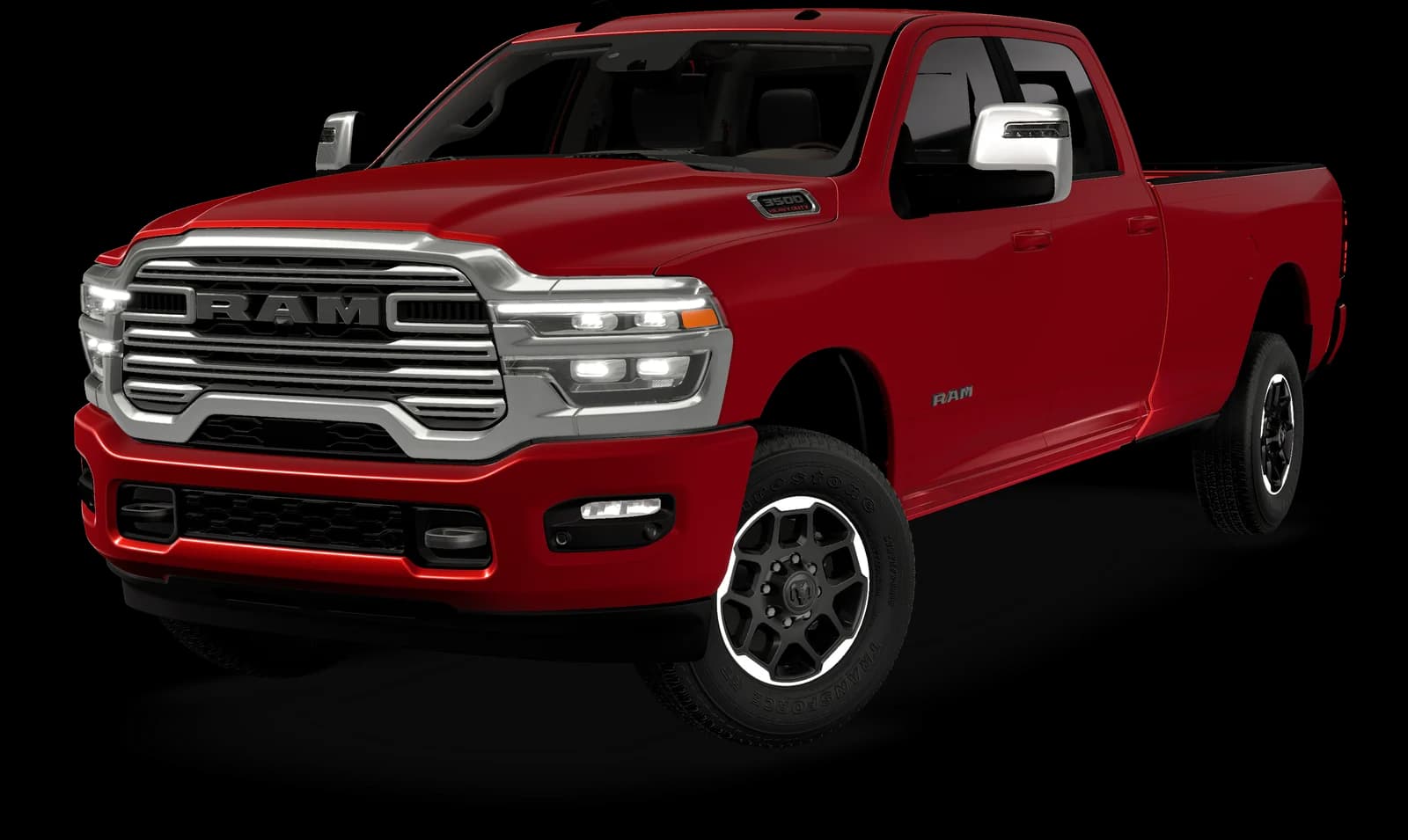
| 6.7L Cummins diesel | Ram 2500, Ram 3500, Chassis Cab | 10W‑30 when warmer than 0°F; synthetic 5W‑40 when colder | MS‑10902 | 12 |
Two smaller entries round it out: the Jeep Cherokee 1.6L lists 0W‑20 full synthetic at 5 qt, and the Compass lists 5W‑30 full synthetic at 5 qt.
Grades on the 3.6L and 5.7L did move. The primary listing went from 5W‑20 to 0W‑20 in 2016 for the Durango and Grand Cherokee 3.6L, in 2018 for the Wrangler JL, in 2019 for the Ram 1500 3.6L, and in 2022 for the Durango, Grand Cherokee and Ram 1500 5.7L. In the 2027 rows (and the 2026 Durango rows) those engines list both grades. Nothing in the data compares the two for cold starts, so we will not either. The 3.6L's full year-by-year grade and capacity history is in our Pentastar breakdown.
Ram 6.7L Cummins: the one place the manuals split by temperature
The Cummins rows are the only engine-oil rows in the database that carry an ambient temperature condition (given as 0°F, or -18°C). They appear for the Ram 2500, Ram 3500 and Chassis Cab, and the capacity is 12 qt in every year listed for the 2500 and 3500.
| Model years | Ambient above 0°F | Ambient below 0°F |
|---|---|---|
| 2015–2018 (2500 example) | 15W‑40 with API CJ-4 | synthetic 5W‑40 with API CJ-4 |
| 2020–2027 (2500, 3500, Chassis Cab) | 10W‑30 with API CK-4 | synthetic 5W‑40 with API CK-4 |
All of these rows cite MS‑10902, and the above-zero rows also accept products that meet Cummins CES 20081. The research data lists no 2019 6.7L oil row for any of the three, and nothing for the 2017 Chassis Cab. So the switch from 15W‑40 to 10W‑30 happened across that gap, and we cannot say which year within it.
Diesel fuel and DEF in the cold
The fuel table gives its own number. For the Ram 2500 and 3500 in 2020 and later, many of the manual rows say that below 20°F (-7°C) you should use climatized No. 2 diesel or blend it with No. 1 ULSD (the 2020, 2022, 2025 and 2026 Ram 2500 rows and the 2020, 2021, 2023 and 2026 Ram 3500 rows are examples); the other years say "extreme cold" without a number. The 2016-2018 Ram 2500 rows give the same 20°F figure as -6°C and recommend a fuel treatment against gelling. The 2020 Ram 1500 EcoDiesel row states 20°F as well. The 2021 Gladiator diesel row is more specific: it reserves No. 1 ULSD for prolonged arctic cold and defines that as -10°F (-23°C).
Biodiesel is the other winter-adjacent note. Every Wrangler, Gladiator and EcoDiesel Ram 1500 diesel row says up to B5, and several add that B6 to B20 is only for states that mandate it (two Wrangler rows, for 2022 and 2023, instead permit B6 to B20 alongside shorter service intervals). The 2025 Ram 2500 row adds that above 5% biodiesel the oil change moves to 15,000 miles or 500 hours, whichever comes first.
Diesel exhaust fluid (DEF) is a separate tank. The research data lists these sizes:
| Vehicle | Years | DEF tank |
|---|---|---|
| Jeep Wrangler and Gladiator, 3.0L diesel | 2021–2023 | 5.1 gal (19.3 L) |
| Ram 1500, 3.0L diesel | 2020–2023 | 5.14 gal (Tradesman and Rebel); 5.74 gal (all other models) |
| Ram 2500 and 3500 | 2015–2018 | 5.5 gal (approximate) |
| Ram 2500 and 3500 | 2020–2024 | 5.7 gal |
| Ram 2500 and 3500 | 2025–2027 | 7.5 gal (2025 page) |
| Ram Chassis Cab | 2015–2018; 2020–2027 | 9 gal; 8.7 gal (approximate) |
Every DEF fluid row cites ISO 22241, and most add that the fluid should be API certified. None of those fluid rows says anything about freezing.
Coolant, including the plug-in hybrids
Every coolant row we hold, from 2015 through 2027, is for an OAT coolant (the abbreviation stands for Organic Additive Technology). The Chrysler, Dodge, Jeep and Ram rows that give an interval say 10 years or 150,000 miles, and most cite MS.90032. There is no gas-versus-diesel or north-versus-south split to chase.
The hybrids add loops. The Wrangler 4xe lists battery coolant at 5.6 qt (2024-2026) and a 5.7 qt power electronics loop (also 2024-2026); the 2024 and 2025 rows flag both as dealer service. The 2026 Grand Cherokee 4xe battery coolant is 5.8 qt (dealer service). The Pacifica Hybrid lists battery coolant at 5 qt (2017-2018), 4.2 qt (2019), 4.5 qt (2025) and 4.8 qt (2026), plus 3.7 qt of power electronics coolant for 2017-2019 and 3.6 qt for 2025-2026; the 2026 Pacifica is the newest. The Pacifica rows add that the OAT coolant is mixed with deionized or distilled water. The research data lists no separate Pacifica battery-coolant row for 2020-2024.
Brake fluid and automatic transmission fluid
Brake fluid is almost uniform: DOT 3 in the manuals for the Wrangler, Grand Cherokee, Durango, Ram 1500, 2500, 3500, Pacifica, Voyager and Gladiator. Most rows cite SAE J1703, though the 2021-2025 Wrangler and 2021-2024 Ram 1500 rows print J1709 instead. Older rows name DOT 4 as the fallback when DOT 3 cannot be found. The ProMaster lists DOT 4 in every year from 2015 to 2027.
Transmission fluid depends on the transmission. In 2027 the main automatic-transmission rows read:
| Fluid | Where it is listed |
|---|---|
| ZF 8 and 9 speed ATF | Wrangler, Gladiator, Durango, Ram 1500, Pacifica, ProMaster, Ram HD gas models, Grand Cherokee 850RE |
| ATF 818 | Charger, Grand Wagoneer, Grand Cherokee 880RE and 8HP80, Ram 2500 and 3500 Cummins models |
| ATF SP4-M | Compass |
How to check your own vehicle
Which engine is under your hood decides everything in the first table, so settle that with the VIN decoder. Then look up your year in the spec explorer; Cummins and Pentastar grades both changed over time, so the year matters.