Buyer guide
Jeep Wrangler vs Gladiator for Midwest Drivers
Same Toledo-built DNA, very different jobs. Size, towing, bed space and winter practicality for Wrangler and Gladiator buyers across the Midwest.
By the Midwest CDJR editors · Updated November 2, 2026 · 5 min read
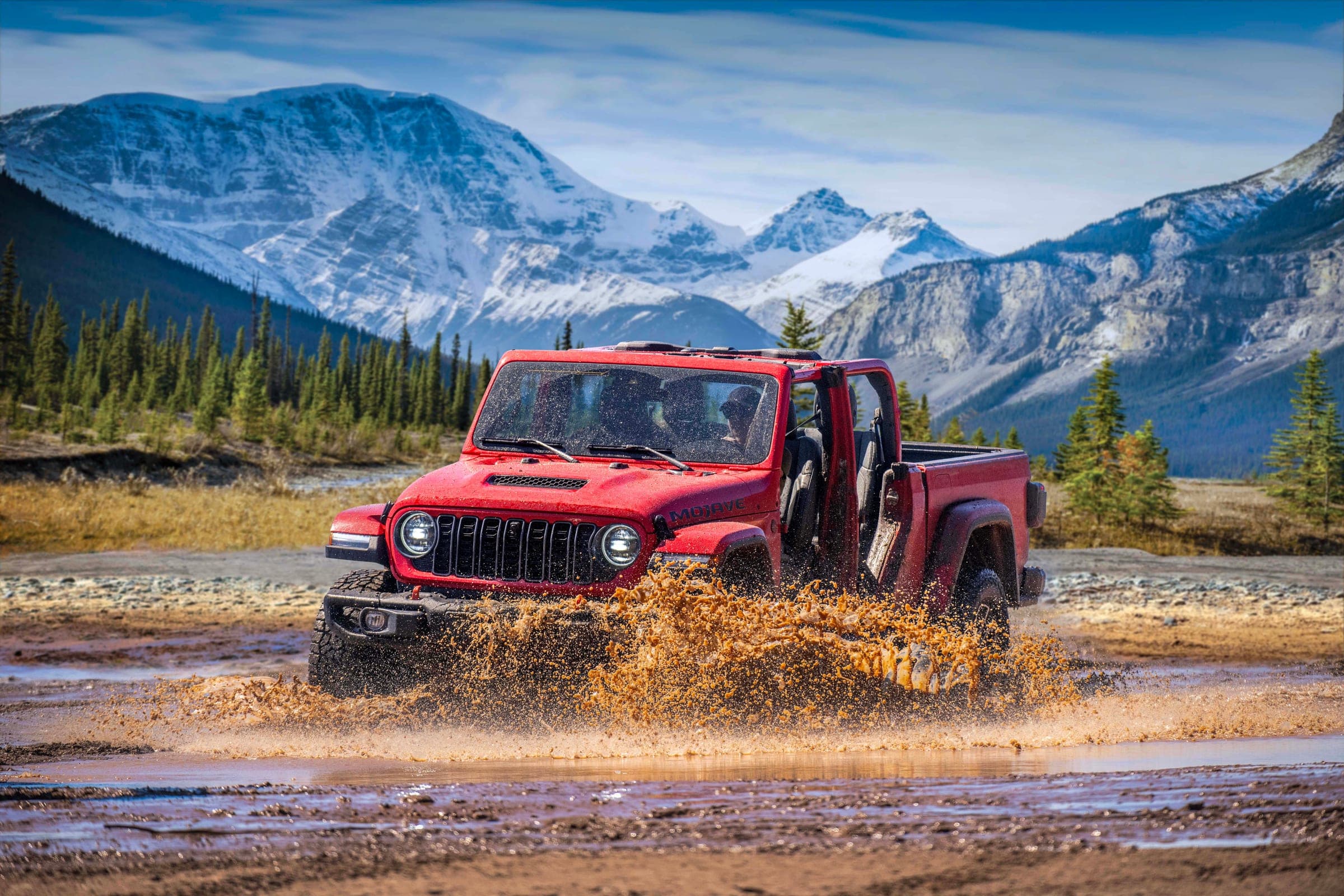
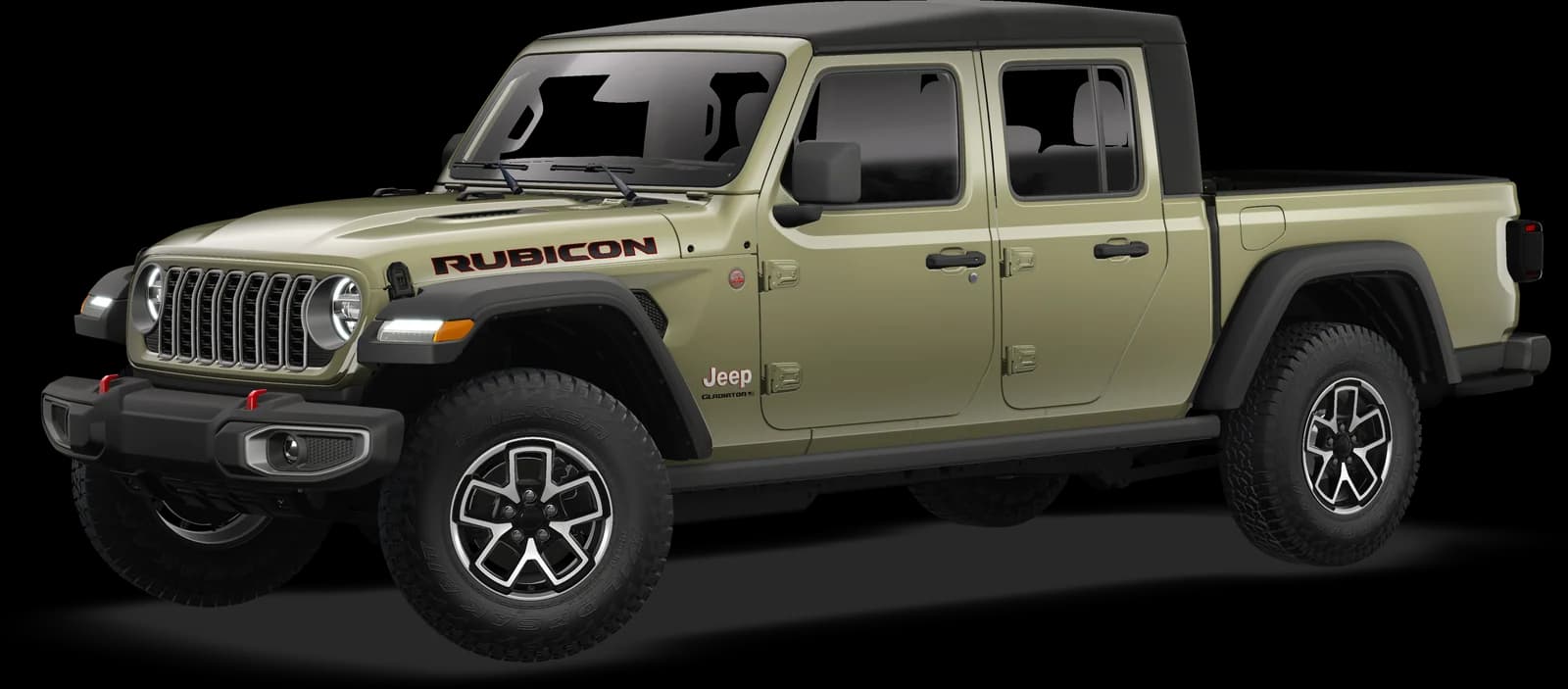
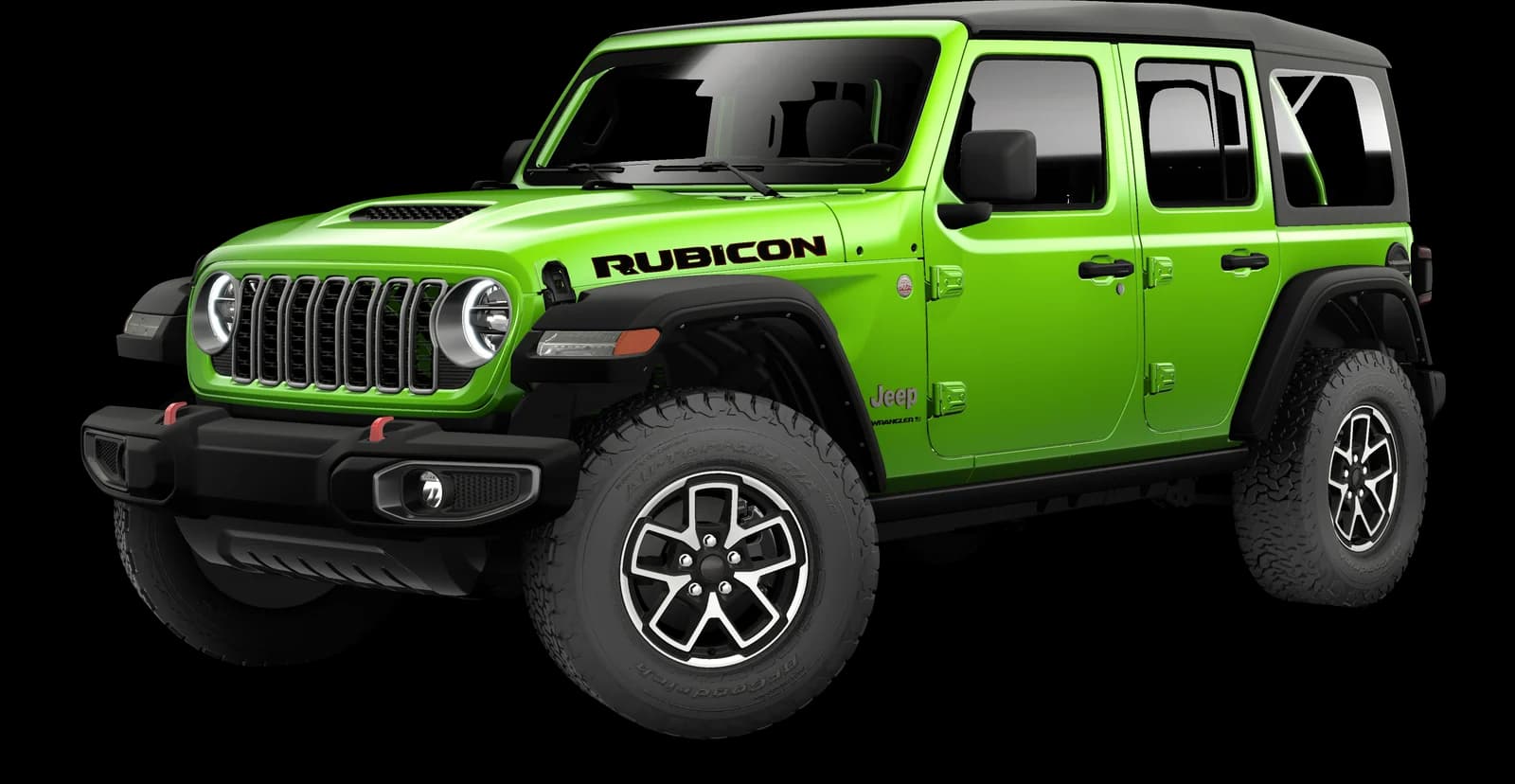
The Wrangler and the Gladiator share a front end, a ladder frame, solid axles, a fold-down windshield and a factory in Toledo, Ohio. The Wrangler is built in the North plant and the Gladiator in the South plant of the same complex. They look like cousins on the street and they are. But they do different jobs, and the choice is simpler than the forums make it.
This guide compares the 2027 Wrangler and Gladiator for the things that matter in Midwest life: winters, gravel roads, lake trailers, garages and highway miles.
The numbers side by side
| Wrangler | Gladiator | |
|---|---|---|
| Body | 2-door or 4-door SUV | 4-door pickup |
| Starting MSRP* | $36,635 (Sport) | $43,895 (Sport S) |
| Engines | 2.0L turbo (270 hp), 3.6L V6 (285 hp), 6.4L V8 (470 hp) | 3.6L V6 (285 hp) only |
| Transmission | 8-speed auto; 6-speed manual with V6 | 8-speed automatic |
| Wheelbase | 96.8 in / 118.4 in | 137.3 in |
| Length | 166.8 in / 188.4 in (with spare) | 218.0 in |
| Seats | 4 (2-door) / 5 (4-door) | 5 |
| Cargo | 31.7 cu ft seats up, 72.4 folded | 35.5 cu ft bed, 60.3 in long (81.3 in with tailgate open) |
| Max towing | 5,000 lbs (4-door Rubicon); most 3,500; 2-door V6 2,000 | 7,700 lbs (Sport/Sport S, 4.10 axle); other trims 4,500 to 7,000 |
| Max payload | 1,562 lbs | 1,720 lbs |
| Ground clearance | 9.7 to 12.9 in | 10 to 12.9 in |
| Turning diameter | 32.7 ft (2-door) / 38.8 ft (4-door) | 44.5 to 44.7 ft |
| City/hwy mpg | 20/22 (turbo, 4-door), 17/22 (V6), 13/16 (V8) | 17/22 |
*Base prices before destination, as published in November 2026. Prices change; confirm with a dealer.
Two notes on what is missing. The Wrangler 4xe plug-in hybrid belonged to earlier model years and is not part of the 2027 lineup. The Gladiator's diesel and manual transmission are also not listed for 2027. So the practical powertrain choice is the V6 on the Gladiator, and a three-way choice on the Wrangler.
Winter driving
Both are strong in snow. Four-wheel drive is standard on every trim of each, with the part-time Command-Trac on most and Rock-Trac on Rubicon models. Both have solid axles and good clearance for unplowed roads. For 2027 Rubicon models of both vehicles include heated front seats and a heated steering wheel as standard, and the Gladiator Mojave does too.
The difference is how they behave on a snowy highway. The Gladiator's 137.3-inch wheelbase is almost 19 inches longer than a four-door Wrangler, and it feels calmer at 70 mph on I-94 or I-80, particularly in crosswinds. A two-door Wrangler is a delight on a trail and a handful on a windy interstate. If you drive 40 highway miles each way, that gap shows up quickly.
Tops matter in winter too. A black hardtop is now standard on the Gladiator Willys and Rubicon, and a body-color hardtop comes on the Mojave. On the Wrangler, soft tops and hardtops are both offered, and the Sky One-Touch power top gives open-air driving in summer. A hardtop is quieter and warmer in January.
Towing and hauling
This is where the Gladiator earns its price. Its top rating of 7,700 pounds is on a Sport or Sport S with the 4.10 axle; other trims are rated between 4,500 and 7,000 pounds depending on trim and tires. That covers most pontoons, bass boats, snowmobile trailers and mid-size travel trailers, as long as you respect payload (up to 1,720 pounds, and less on well-equipped trims).
The Wrangler is the lighter-duty tool. A four-door Rubicon with the automatic, 4.10 axle and LT285 tires reaches 5,000 pounds, most other four-doors are rated at 3,500 pounds, and a two-door with the V6 is rated at 2,000. A Wrangler suits a small utility trailer, a jet-ski trailer or a light fishing boat.
The bed matters too. The Gladiator's bed is just over five feet with the tailgate closed. It handles ice-fishing gear, firewood, a snowblower or a few bags of feed, but not a full sheet of plywood flat. Rubicon X and Mojave X add a cargo management group with a 115V outlet, a roll-up tonneau cover and a bed-mounted Trail Rail System. In a Wrangler, cargo stays behind the rear seat and is dry and lockable, but it is a smaller space.
Trails and gravel
Off-road, the Wrangler has the geometry advantage. The short wheelbase gives it a breakover angle of up to 32.4 degrees and a departure angle up to 40.4 degrees, versus 23.3 and 26.7 degrees for the Gladiator. In practical terms, the Wrangler gets over sharper crests and out of ditches more easily, and the Gladiator's long tail can drag on steep transitions. Both reach 12.9 inches of ground clearance with the 35-inch tire package.
For Midwest gravel roads and county lanes, neither will struggle. The Gladiator is steadier and more stable on washboard and the Wrangler is more nimble. The Mojave trim, with Fox shocks and Desert Rated hardware, is aimed at fast gravel and sand driving, which suits parts of the Plains and the Sandhills.
Daily life: garages, parking and fuel
Size is the sleeper issue. The Gladiator is 218 inches long, about 30 inches longer than a four-door Wrangler. That is within a few inches of a Ram 1500 Quad Cab, so a Chicago garage, a Twin Cities parking ramp or a downtown Cleveland street spot can be a squeeze. Its turning circle is also wide, 44.5 feet. A four-door Wrangler turns in 38.8 feet and a two-door in 32.7.
Fuel economy is similar for the V6 engines at 17/22 mpg. The Wrangler's 2.0-liter turbo is the most efficient option at 20/22 mpg, and the 392 V8 is the thirstiest at 13/16 and requires premium. Both carry 21.5 to 22 gallons of fuel in four-door form.
Price
The Wrangler starts at $36,635 and the Gladiator at $43,895, a gap of about $7,260 at the entry level. Higher trims close the gap: Jeep's site shows the Wrangler Rubicon X at about $61,230 and the Gladiator Mojave X at about $63,295.
Which one for which Midwest driver?
- Daily driver, one vehicle, some trail use: Wrangler four-door. It's the better all-rounder and lower in price.
- Tows a boat, camper or snowmobile trailer: Gladiator. The extra tow rating and wheelbase matter.
- Hauls gear for work, hunting or fishing: Gladiator, with a bed cover or tonneau.
- Tight urban parking, shorter trips: Wrangler two-door or four-door.
- Highway commuter with 80 miles a day: neither is ideal; consider a Grand Cherokee instead.
State context matters. Ohio and Michigan buyers have easy access to Toledo-built Jeeps and heavy lake-effect snow; see our Ohio and Michigan guides. In the Plains and the Dakotas, the Gladiator's tow rating and stability fit better; see South Dakota.
Bottom line
Buy the Wrangler if you want the most capable, compact and flexible Jeep and your towing is light. Buy the Gladiator if you need a bed, a longer wheelbase and up to 7,700 pounds of tow rating, and your garage is big enough. Either one gets through a Midwest winter. The real question is whether you want an SUV or a truck.