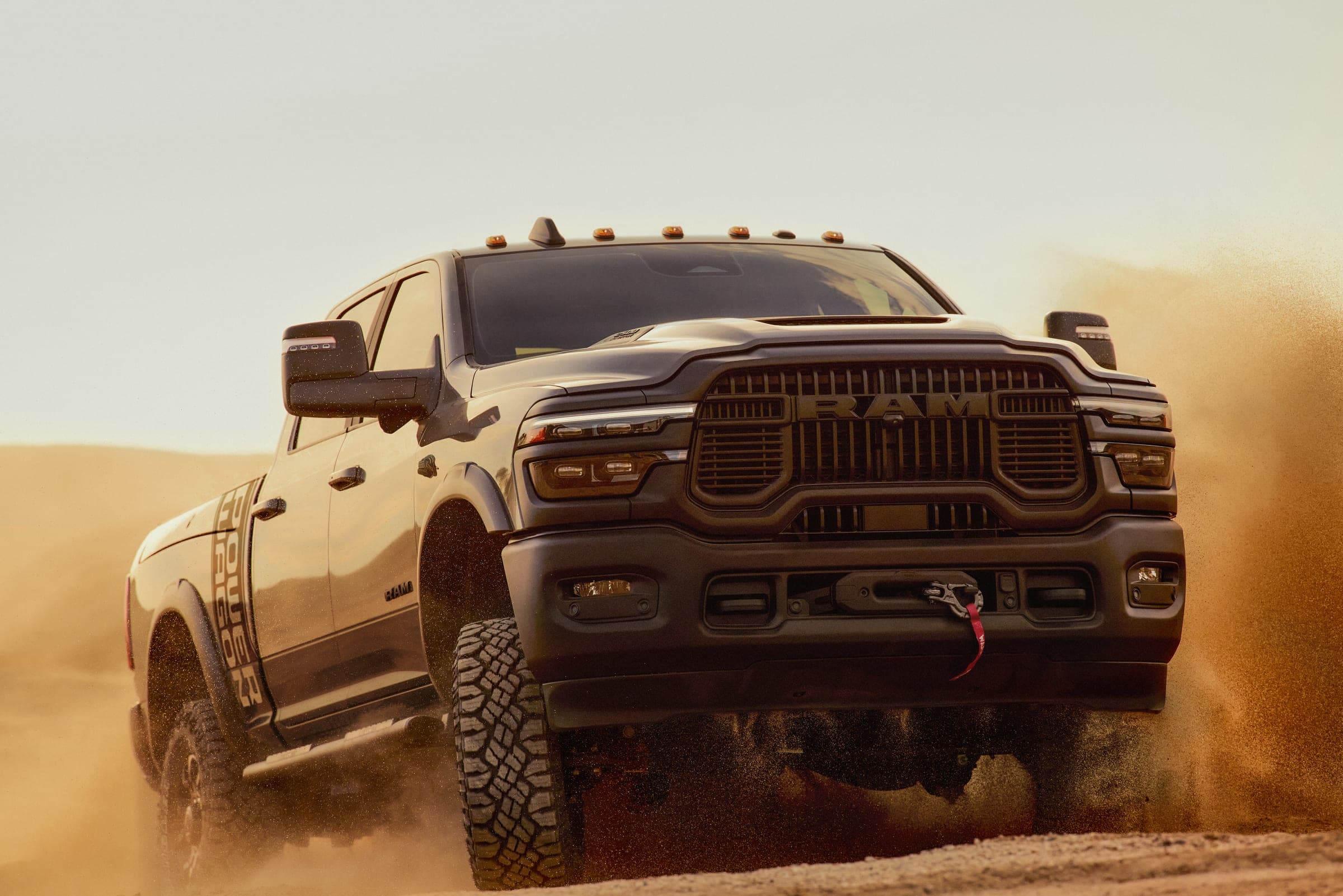
Buyer guide
Ram 1500 vs 2500 for Towing Campers and Boats
Payload, not the tow rating, decides whether a Ram 1500 or 2500 fits your camper or boat. Real numbers and Midwest lake-country math.
By the Midwest CDJR editors · Updated November 2, 2026 · 6 min read
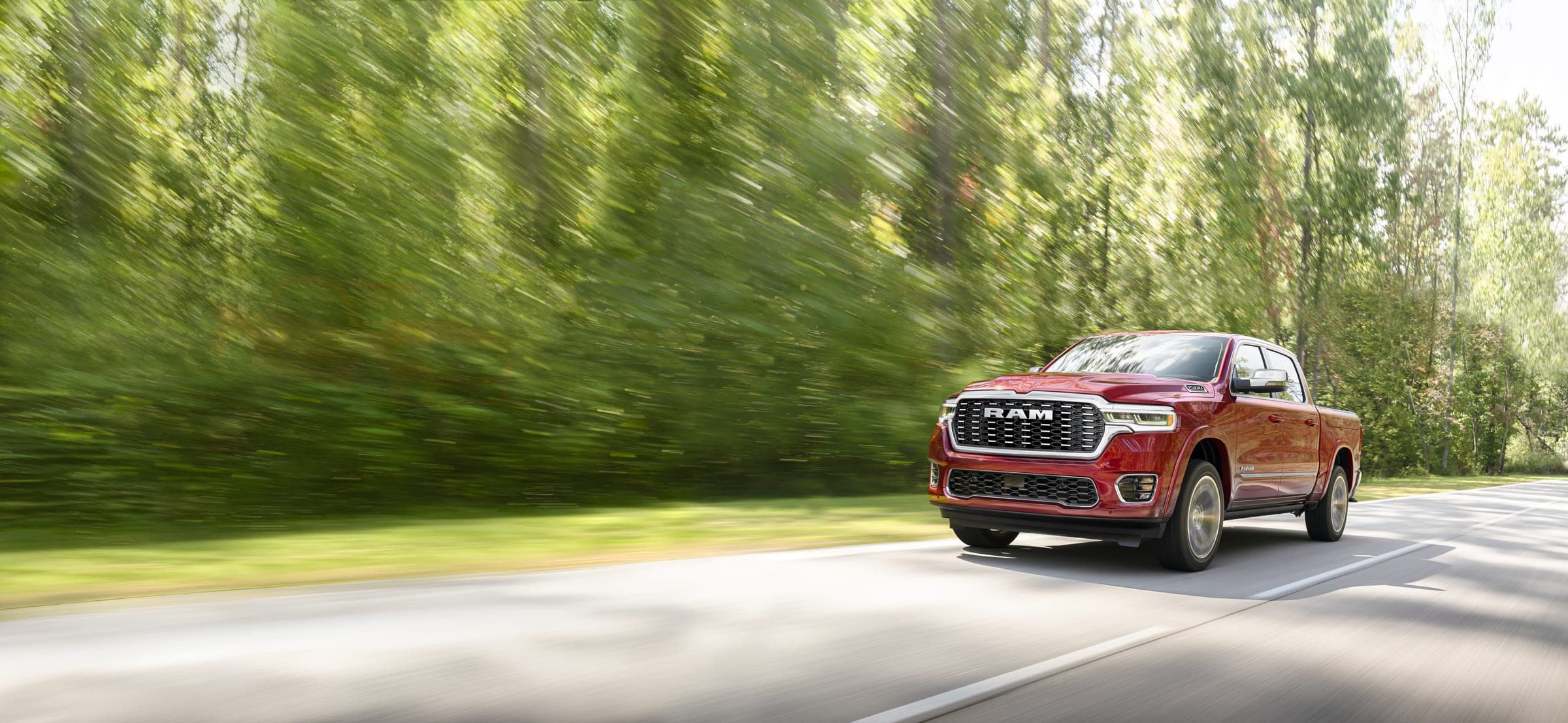
Every spring the same conversation happens at Midwest dealerships. Someone is buying a travel trailer, a pontoon or a walleye boat, they have seen a big tow number on a Ram brochure, and they want to know whether a half-ton is enough or whether they need to step up to a three-quarter-ton heavy-duty truck.
The honest answer is that the tow rating is the wrong number to start with. Payload is.
The ratings, side by side
All figures below are the manufacturer's maximums for the 2027 model year, and each applies to specific configurations. Heavy-duty ratings are preliminary as published. Always check the sticker and trailer-towing chart for the exact truck.
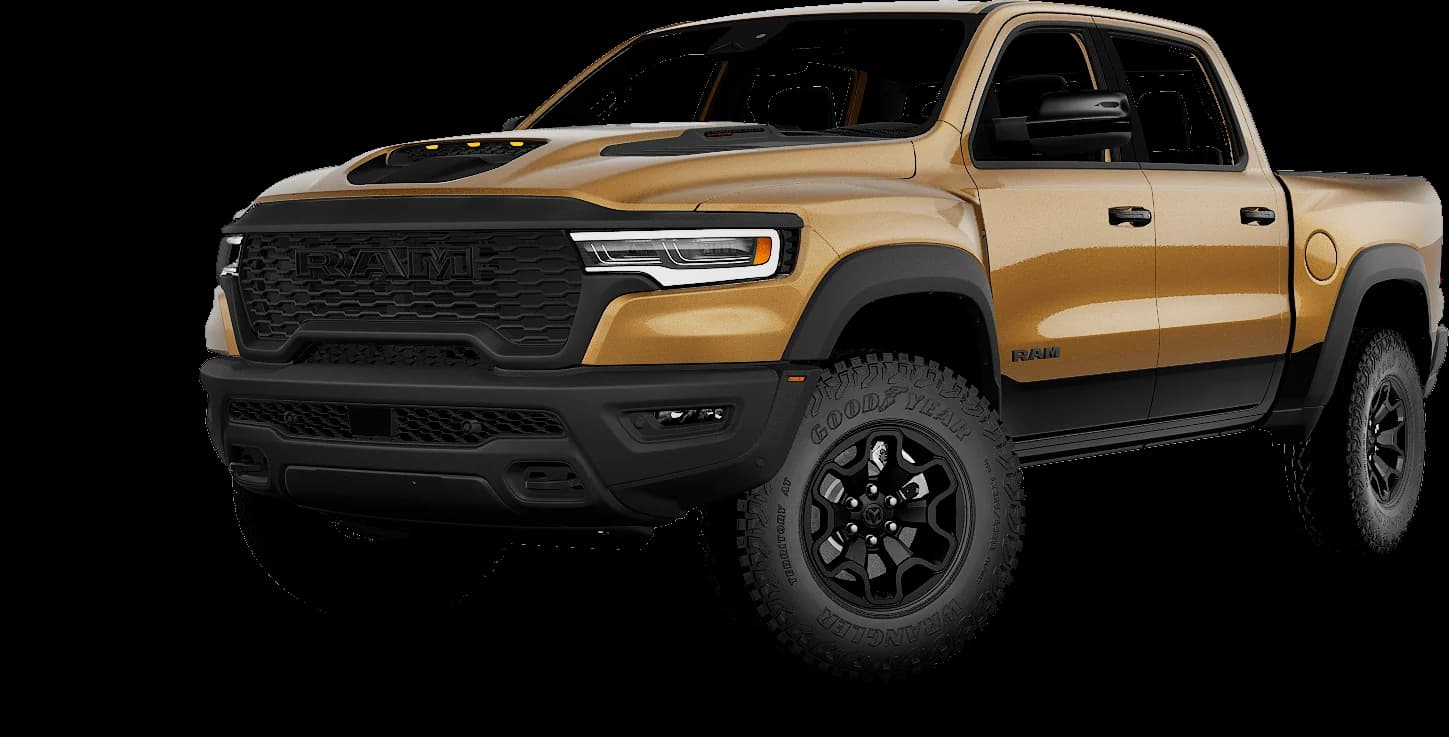
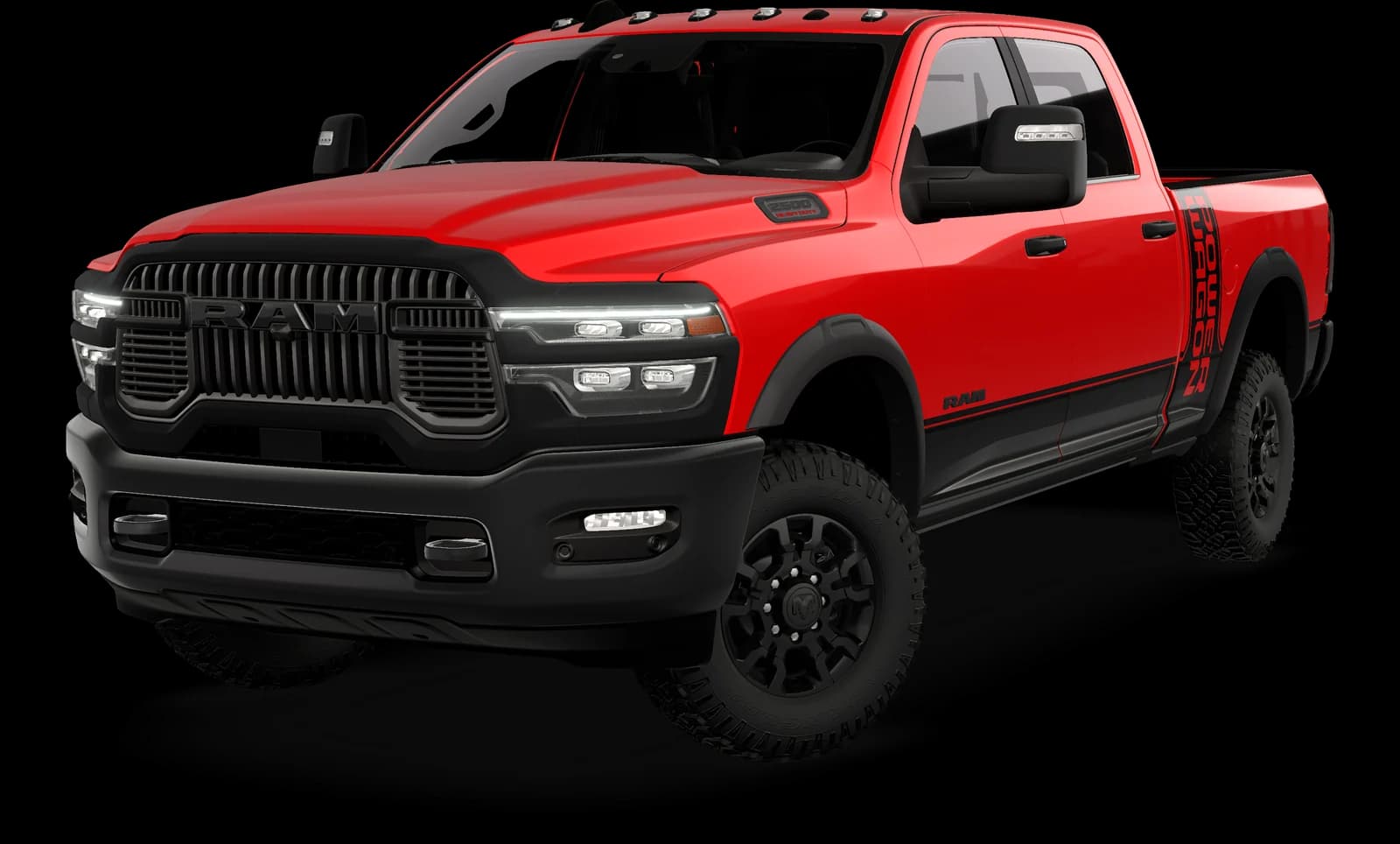
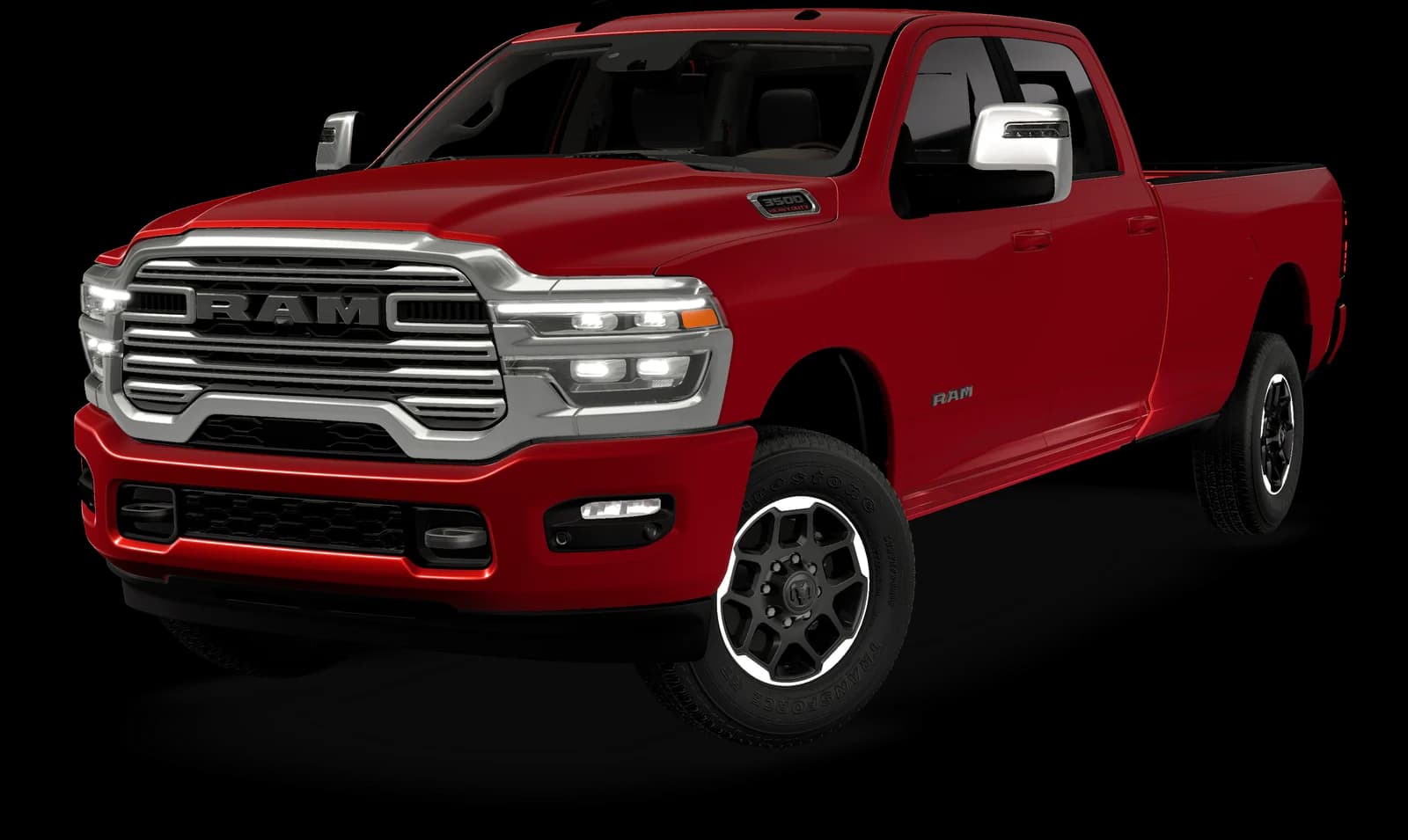
| Ram 1500 | Ram 2500 | Ram 3500 | |
|---|---|---|---|
| Starting MSRP* | $42,575 | $48,040 | $49,340 |
| Engines | 3.6L V6, 5.7L HEMI, 3.0L Hurricane (two outputs), more | 6.4L HEMI V8 or Cummins HO diesel | 6.4L HEMI V8 or Cummins HO diesel |
| Max towing | 11,530 lbs (Hurricane, standard output) | 17,740 lbs (HEMI) / 20,000 lbs (diesel) | 18,140 lbs (HEMI) / 37,020 lbs (diesel) |
| Max payload | 2,340 lbs (V6); 1,880 lbs (Hurricane SO) | 4,580 lbs (HEMI with package) / 3,990 lbs (diesel) | 7,580 lbs (HEMI) / 6,460 lbs (diesel) |
| Rear suspension | Coil springs | Five-link coil springs | Two-stage leaf springs |
*Before destination, as published on ramtrucks.com in 2026.
Notice what happens inside the 1500 column. The engine that tows the most (the standard-output Hurricane) also carries 1,880 pounds. The 5.7-liter HEMI with eTorque tows up to 11,370 pounds with 1,680 pounds of payload. The 2,340-pound payload figure goes with the V6, which tows 8,100. You never get both headline numbers on the same truck.
Why payload is the real constraint
A trailer pushes down on your hitch. For a conventional travel trailer or boat trailer, that tongue weight is typically 10 to 15 percent of the loaded trailer weight. A fifth-wheel or gooseneck puts 15 to 25 percent of its weight on a pin in the bed. All of that counts against payload, along with passengers, cargo, the hitch itself and anything in the bed.
Here is an illustrative example, not a specific trailer. Say you buy a travel trailer that weighs about 7,500 pounds once it is loaded for a week at a state park.
- Tongue weight at 13 percent: roughly 975 pounds.
- Weight-distribution hitch: about 100 pounds.
- Two adults, two kids and a dog: perhaps 500 pounds.
- Cooler, bikes, firewood and tools in the cab and bed: perhaps 200 pounds.
That is about 1,775 pounds against a Ram 1500 payload that might be 1,680 pounds (HEMI eTorque) or 1,880 pounds (standard-output Hurricane), depending on the truck. The trailer is well inside the tow rating, and the truck is still at its limit. That is exactly the situation where a half-ton feels fine on the way to the campground and sloppy on the way home.
A Ram 2500 HEMI with the new $835 Payload Upgrade Package is rated for up to 4,580 pounds of payload, which makes the same trip feel unremarkable.
When a Ram 1500 is the right truck
A Ram 1500 makes sense when your load is modest relative to the truck, and when you use the truck for everything else too. Good matches include:
- A bass boat, fishing boat or small pontoon on a single-axle or tandem trailer.
- A pop-up camper, teardrop or small travel trailer, in the roughly 3,000 to 6,000-pound loaded range.
- A snowmobile or ATV trailer to the Northwoods, UP or Black Hills.
- A truck that also does commuting, school pickup and Costco runs, and needs to fit in a garage.
The 1500 rides better empty, parks easier and costs less to buy and fuel. With a 26-gallon tank standard and a 33-gallon tank optional, plan fuel stops on long hauls, since towing can cut range sharply. If you tow the same 5,000-pound trailer twice a summer, the 1500 is the efficient answer.
When you need a Ram 2500
Step up to a 2500 when any of these are true:
- Your camper is a large travel trailer or a fifth wheel.
- You tow often, or long distances, such as Chicago to the Wisconsin Dells, Minneapolis to the Boundary Waters or Kansas City to Branson, with a loaded trailer behind you for hours.
- You carry a slide-in camper or a heavy bed load as well as pull a trailer.
- You plow snow. Ram 2500 and 3500 pickups come with a 220-amp alternator and snowplow prep wiring as standard.
- Your trailer's pin weight or tongue weight alone would use most of a half-ton's payload.
The 2500 uses coil springs in the rear, so it rides more comfortably than the leaf-sprung 3500, and it is easier to live with every day than most buyers expect. It is bigger, though: wheelbases run from about 140 to 169 inches and overall length reaches about 261 inches, so a Crew Cab long-bed will not fit every garage in Chicago or the Twin Cities. Ask about fuel-tank options for the cab and bed you want, since range matters when you tow.
Gas or diesel in the 2500?
This is where numbers surprise people.
The 6.4-liter HEMI is rated at up to 17,740 pounds of towing and, with the payload package, up to 4,580 pounds of payload. The 6.7-liter Cummins High-Output diesel makes 430 hp and 1,075 lb-ft and is rated at up to 20,000 pounds, but its maximum payload is lower at 3,990 pounds. The diesel adds weight at the front axle, and that comes off your payload.
So for a very heavy fifth wheel pulled long distances at highway speeds, the diesel's torque and exhaust brake are the better tool. For heavy loads in the bed and moderate trailers, the gas truck carries more and costs less up front. Diesels need diesel exhaust fluid, which freezes at about 12°F. The truck has heating systems for that, but it is one more thing to know about if you drive in North Dakota in January. It is worth asking about cold-start features on the Cummins and a block heater on any engine.
Note that heavy-duty trucks above 8,500 pounds GVWR do not carry EPA fuel-economy labels, so expect to rely on owner reports for real-world mileage.
The Ram 3500 question
A 3500 is the next step for very heavy trailers. Its leaf springs and available dual rear wheels lift payload to 7,580 pounds with the HEMI and tow ratings to 37,020 pounds with the diesel, though the heaviest ratings require the Max Tow axle and gooseneck or fifth-wheel hardware. For a fifth wheel that is long, heavy, or both, the 3500 offers a margin the 2500 does not. It rides firmer empty, which is the cost of that capability.
A Midwest towing checklist
Some local reality checks before you sign:
- Read the door-jamb payload sticker on the exact truck you are buying, not the brochure.
- Get the trailer's loaded weight by weighing it at a CAT scale, not the dry weight from the brochure.
- Plan for wind. Crosswinds across Nebraska, Iowa and the Dakotas push trailers around. Weight distribution and sway control help.
- Think about the ramp. Wet, cold boat ramps on spring weekends on Lake Minnetonka, Mille Lacs or Lake of the Ozarks are where 4x4 earns its cost.
- Check the tow package options: axle ratio, trailer brake controller, tow mirrors, and rear air suspension on the 2500.
For state-specific advice, see our guides for Wisconsin, Minnesota and Indiana, where camper season is a way of life.
Bottom line
Buy a Ram 1500 if your trailer is under about 6,000 pounds loaded, you want one truck for everything and you've done the payload math. Buy a Ram 2500 if you have a large travel trailer, a fifth wheel or a plow, and consider a 3500 for the heaviest campers. The tow rating gets the attention, but payload decides whether the truck is comfortable.